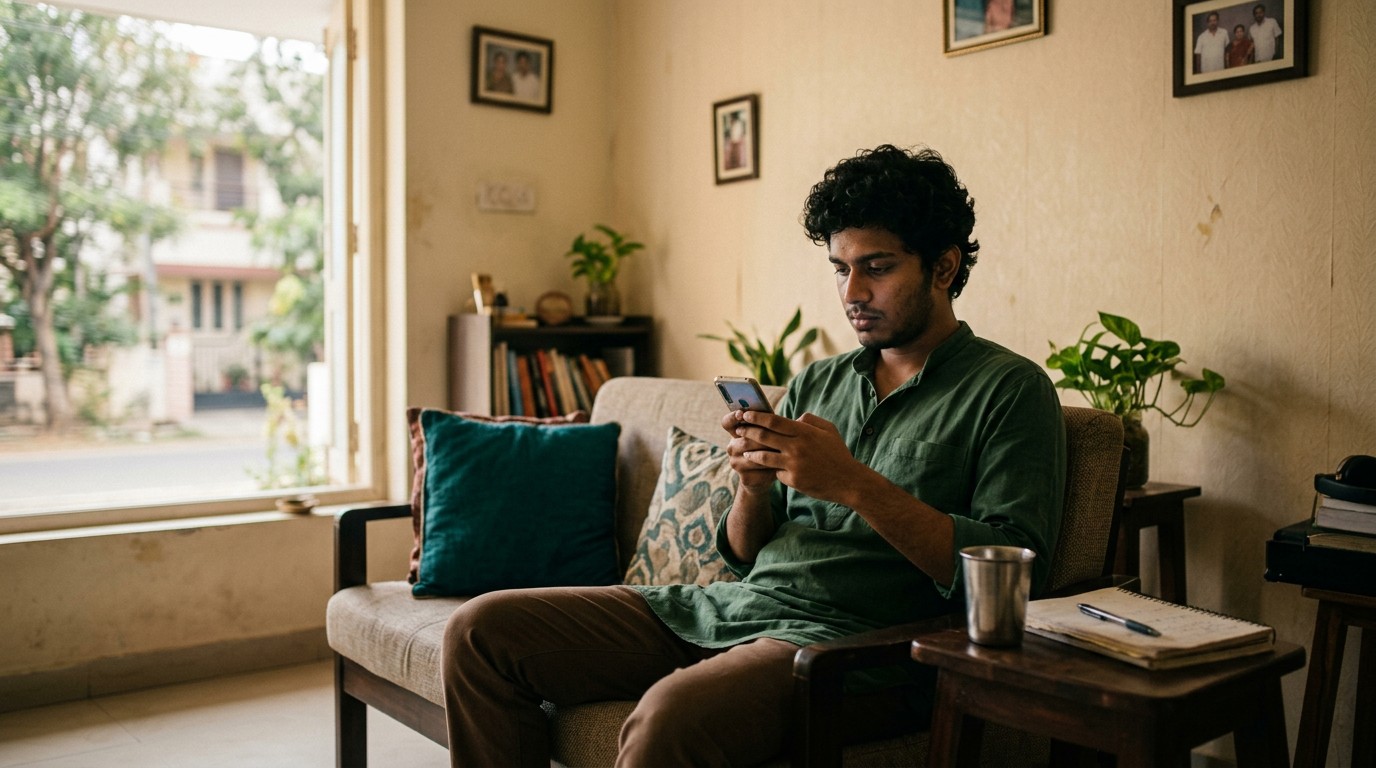
Watch ads and earn money apps can only pay what an advertiser pays for your attention, which is very little. At a generous emerging market rewarded video rate of $1.90 per 1,000 views, one ad view is worth roughly 18 paise. Rs 500 in a single day would need about 2,744 views, close to 23 hours of back to back clips.
Listen to this article, about 12 minutes. A synthetic voice reads the article and announces each section title as it begins; tables are read row by row and the questions at the end are left out.
Recorded 25 September 2026 from the article as published that day. Press a chapter to jump there; the highlighted line is what is playing. A play button sits beside every section heading, and once you scroll past this player a bar at the bottom of the screen keeps the controls in reach. Tap or click any sentence to hear the reading start from there.
On this page: the arithmetic of what one ad view can pay in India, built from Mistplay’s 2025 eCPM data and the RBI reference rate of 25 September 2026, plus dated withdrawal accounts from two platforms’ public review pages and the sequence the Bhopal Cyber Crime Branch advisory describes.
Think you already know this? Five questions, one minute.
Every answer is on this page. Answer from what you know now; the page fills in the rest.
-
1. Using the generous ceiling this article works from, roughly what is a single ad view worth in India?
At $1.90 per 1,000 rewarded video views, the lowest regional figure Mistplay publishes, and the RBI reference rate of Rs 95.8918 on 25 September 2026, one view works out at about Rs 0.18 before the app keeps anything. Read the section
-
2. Reviewers report being paid a few rupees per clip, far above that ceiling. Where does that money come from?
Advertisers pay a few paise for an impression but pay properly for a conversion, such as a completed survey. Reviewers on Earn Doing’s Trustpilot page describe surveys paying $0.20 to $1.50 against a $10 minimum, which is survey money rather than ad money. Read the section
-
3. In the advisory the Bhopal Cyber Crime Branch issued, what happens before the fee is demanded?
The advisory of 14 June 2026 describes small genuine transfers of Rs 50 to Rs 200, and in some cases up to Rs 10,000, used to establish that the money is real before a fee of Rs 5,000 to several lakh is asked for. Read the section
-
4. After calling the 1930 helpline and getting an acknowledgement number, how long do you have to file the formal complaint?
The complaint is completed on the National Cyber Crime Reporting Portal within 24 hours of receiving the acknowledgement number by SMS. The 1930 helpline runs in all states and union territories. Read the section
-
5. Which of these is the clearest reason to stop before signing up?
Thresholds and advertising are normal. Advance payment is not: the Bhopal Cyber Crime Branch states plainly that any online job demanding advance payment is likely fraudulent. Read the section
What does one ad view actually pay in India?
Every rupee a reward app pays you has to come from an advertiser first. So the honest way to test any “watch ads and earn money” promise is to work out what the ad itself is worth, then see whether the promised payout fits inside it.
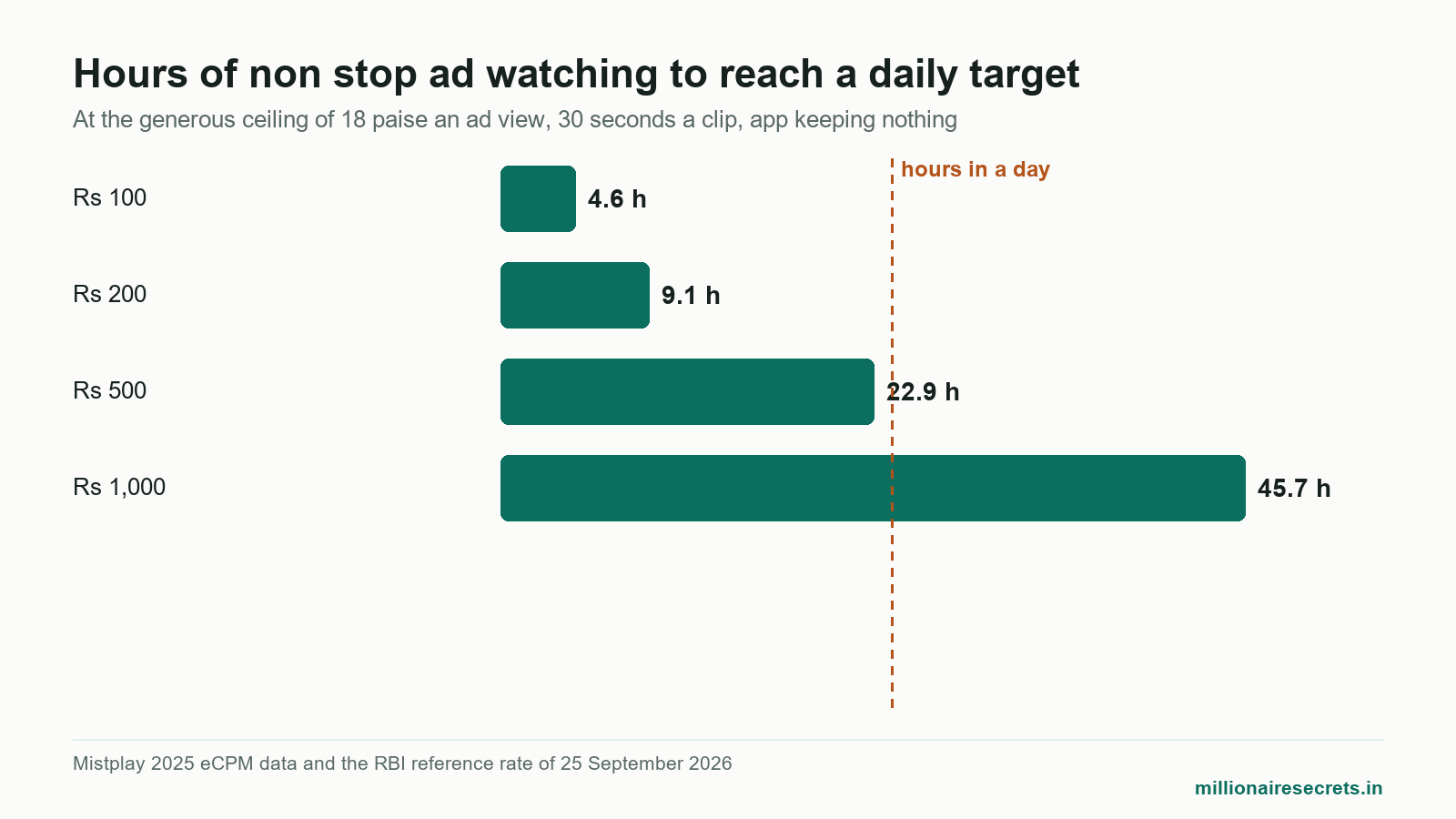
Here is the awkward part, and we would rather say it than paper over it: none of the ad monetisation firms that publish benchmark data break India out on its own. Mistplay’s eCPM reference groups India with Brazil and the Philippines as emerging markets that post lower rates across every format, and the lowest region it publishes a figure for is Latin America, at $1.90 per 1,000 rewarded video views on Android. So we have used $1.90 as a deliberately generous ceiling. If the real India number is lower, and it almost certainly is, every figure below gets worse, not better.
| Input | Value used | Where it comes from |
|---|---|---|
| Rewarded video eCPM, Android, lowest region published | $1.90 per 1,000 views | Mistplay, 2025 data |
| US dollar to rupee reference rate | Rs 95.8918 | RBI reference rate, 1pm on 25 September 2026 |
| Value of one ad view, before the app keeps anything | Rs 0.18 | Calculated from the two rows above |
| Length of one rewarded clip | 30 seconds | Our stated assumption, change it and redo the sum |
| Ceiling per hour of non stop ads, app taking zero margin | Rs 21.86 | Calculated |
| Views needed to reach Rs 500 in a day | 2,744 | Calculated |
| Time that takes at 30 seconds a clip | 22.9 hours | Calculated |
Rs 21.86 an hour is the ceiling, not the wage. It assumes the app hands you every paisa the advertiser spent and keeps nothing, which no business does. Halve it for a realistic revenue share and you are at about Rs 11 an hour for staring at your phone without pause.
Ad view ceiling calculator
Change any input and the arithmetic in this article redoes itself. The defaults are the generous ceiling used above: the lowest regional rewarded video eCPM Mistplay publishes, a 30 second clip, and an app that keeps nothing.
Rate used: Rs 95.8918 to the dollar, the RBI reference rate of 25 September 2026.
Arithmetic about advertising rates, not advice about your money.
Watch ads and earn money se Rs 500 daily kaise dikhaya jaata hai?
Agar ek ad view ki value 18 paise hai, to Rs 500 daily ka screenshot kahan se aata hai? Three ways, and none of them is ad revenue.
The first is a wallet number that is not money. Many apps credit coins or points at a rate they set themselves, then set a withdrawal threshold you never quite reach. The balance on screen is real. The claim on the company is not.
The second is somebody else’s deposit. If new joiners pay a registration or plan fee, early payouts can be funded out of that fee rather than out of advertising, which is the mechanics of a chain, not a job. It works beautifully until recruitment slows.
The third is the honest one, and it is why this question confuses people: some of the money genuinely is real, but it is not coming from the ads.
Why do some apps pay more per video than an ad view is worth?
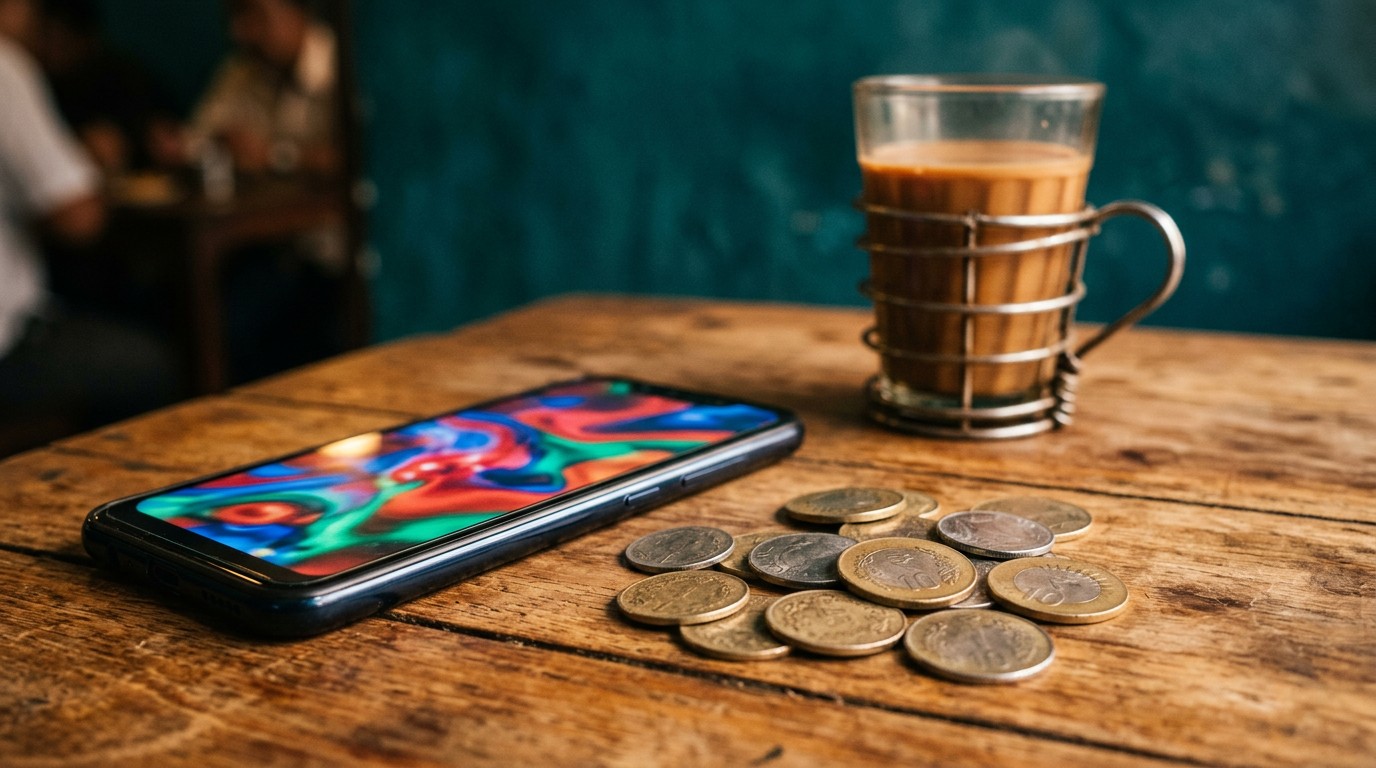
This is the bit the top ten earning apps listicles never reconcile. Reviewers of these platforms report per clip payouts of roughly $0.01 to $0.05. At the reference rate above that is Rs 0.96 to Rs 4.79 a clip, which is five to twenty six times the ceiling we just calculated for a bare ad impression. Both numbers cannot be right about the same thing.
They are not about the same thing. An advertiser pays a few paise for an impression, but pays properly for a conversion: an app installed and played to level ten, a trial started, a survey completed by someone in the right demographic. A completed survey is worth dollars, not paise. So when a reward app pays you Rs 4 for watching a video, the video is usually the wrapper and the offer behind it is the product.
Which gives the practical version of the answer: the money in reward apps sits in offers and surveys, and pure ad watching is the part that cannot pay. Anything advertising itself on ad viewing volume is advertising the worst paid thing it does. One survey app that publishes its rules plainly is covered in our AttaPoll survey app breakdown, which works its minimum through to rupees.
| Route | What it really pays | Paid in | Evidence |
|---|---|---|---|
| Pure ad or video viewing | Under 20 paise a view at the generous ceiling | In app wallet | The calculation above |
| Offerwall and survey tasks | $0.20 to $1.50 a survey, as reviewers report, with a $10 minimum payout | Cash or gift card | Trustpilot reviews, 8 May 2026 |
| Google Opinion Rewards | Varies with survey length, and Google publishes no rate | Google Play credit, never cash or UPI | Google’s own help page |
| Premium task plans that ask for money first | Nothing, once the fee is paid | Nothing | Cyber Crime Branch advisory, 14 June 2026 |
One clarification worth keeping, because it trips people up: rewarded ads themselves are perfectly legitimate. Google Play’s ads policy treats them as an accepted format where users have explicitly opted in, while separately prohibiting ads that simulate or impersonate the user interface of an app feature, and ads with false dismiss buttons. The format is fine. The arithmetic of what it can fund is the problem.
What do people who have actually used these apps report?
We went looking for the public record rather than the promises. What follows is what users report, not a finding about what any app pays, and the range genuinely runs both ways.
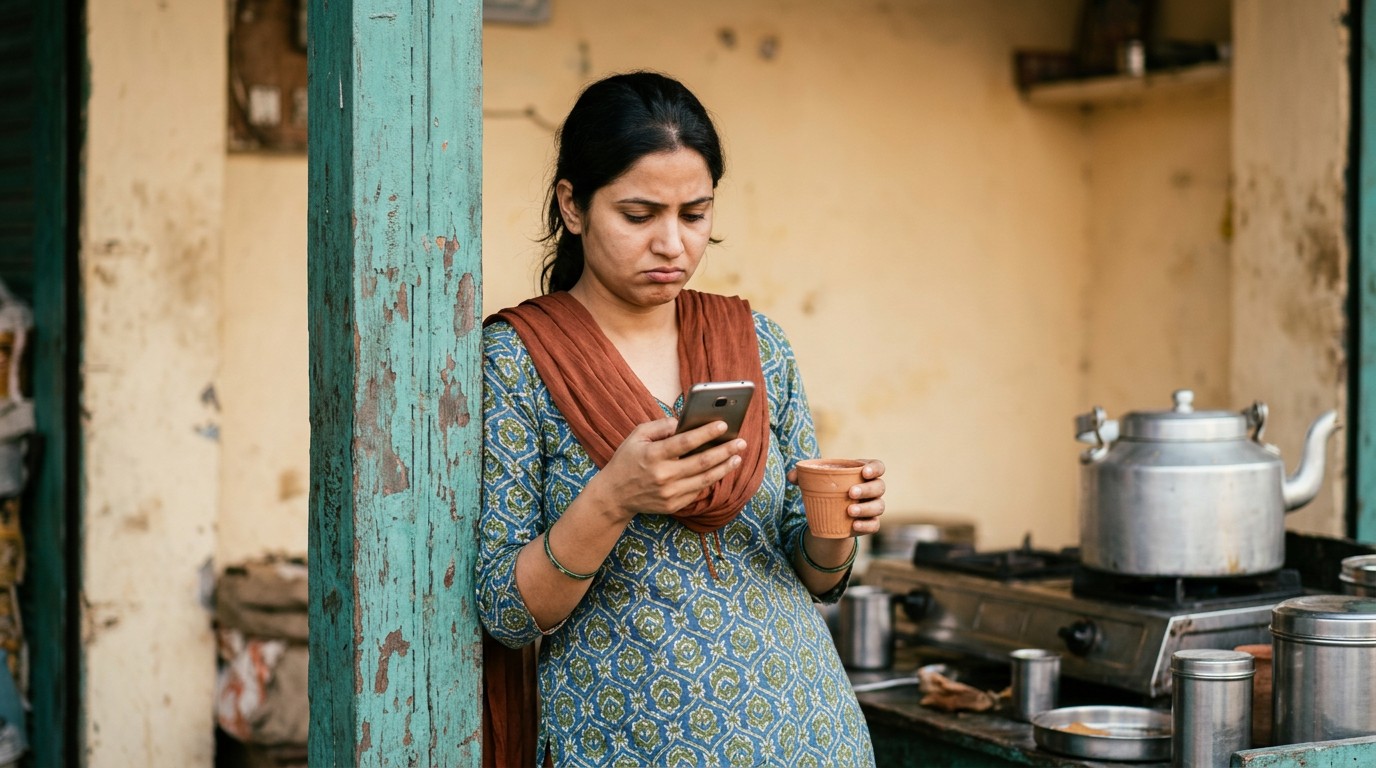
On Nuggmi’s Trustpilot page the score sits at 2.3 out of 5 across 122 reviews with 60 per cent of them one star, and the complaints cluster on one step rather than on the earning. A reviewer posting on 11 September 2026 reported reaching the minimum withdrawal and being told the cash out had processed successfully, then never seeing it in the wallet. One on 19 August 2026 reported a first payment pending for weeks with no reply to an in app ticket or an email. One on 27 July 2026 listed withdrawal requests of $3.44 and $2.92 still pending from June and July, alongside a $1.85 payment from April that was marked paid. Another, in May 2026, reported the account being suspended after two months at the point of cashing out $2.50. The threshold itself is small, $2 through FaucetPay according to a July 2026 reviewer, which is about Rs 192.
Now the accounts that cut the other way, because they exist. Earn Doing’s page scores 4.3 out of 5 across 171 reviews, with 11 per cent one star. A reviewer on 8 May 2026 described surveys paying $0.20 to $1.50, a $10 minimum, and payouts arriving inside 48 hours; Indian reviewers in March and April 2026 rated it five and four stars. That is a platform that appears to pay, and its own reviewers describe the money coming from surveys, not from ad views.
Indian reviews of several watch and earn apps repeat one mechanism often enough to name: a tiny credit per video against a withdrawal threshold set high enough that the two never meet, and videos that thin out as the balance nears it. Those pages would not open for us to date each account individually, so we report the pattern and not a count.
Where the accounts and the arithmetic agree: nobody in any of these reviews reports earning anything like Rs 500 a day from watching ads. Where they disagree with the app store copy: payment, when it happens, is reported on surveys and offers against a dollar denominated threshold, not on ad volume.
Which watch and earn offer is outright fraud, and how does it work?
There is a version of this that is not a badly paid app at all, and the police have described it in detail. On 14 June 2026 the Cyber Crime Branch in Bhopal issued an advisory about watch and earn fraud, in which people are approached on WhatsApp or Telegram and told they can earn thousands a day for watching videos, liking posts or rating apps.
The sequence is the part to memorise. Small real transfers come first, Rs 50 to Rs 200 and in some cases up to Rs 10,000, purely to establish that the money is real. Then the premium or high value task tier appears, needing a registration fee or deposit of anything from Rs 5,000 to several lakh. After that payment the contact goes quiet. The branch’s advice is blunt: any online job demanding advance payment is likely fraudulent, do not trust unsolicited messages or links, never share banking details or OTPs, and keep screenshots as evidence.
Note what the small early payments are doing. They are not earnings, they are the cost of the setup, and they are the most effective part of it. The same pattern drives the Telegram task scam and the fee based part time job offer.
What should you do if you have already paid a fee?
Report it as a financial cyber fraud, and do it quickly, because the recovery route depends on the money still being traceable.
Call 1930, the national cyber crime helpline, which the Indian Cybercrime Coordination Centre runs in every state and union territory. You give your name, mobile number, address and the transaction details, and you receive an acknowledgement number by SMS. You then have 24 hours to complete a formal complaint on the National Cyber Crime Reporting Portal at cybercrime.gov.in using that acknowledgement number, under its Financial Fraud category. The Press Information Bureau records the helpline as running in all states and union territories, and the portal itself was launched on 30 August 2019.
Keep the screenshots, the UPI reference numbers and the chat history before you uninstall anything. Our fuller walkthrough is in recovering money lost to an earning app, and the reporting steps are set out in how to report online fraud.
How do you check a reward app in under a minute?
Four questions, in this order, and any single no is enough to stop.
- Does it ask for money, a plan, a deposit or a refundable fee at any stage? A real employer pays you, not the reverse.
- Is the payout described in rupees or dollars with a stated threshold, or only in coins and points at a rate the app can change?
- Does the earning come from surveys and offers, or does the pitch lean on how many ads you can watch?
- Do the newest reviews, sorted by recent rather than by rating, describe withdrawals actually arriving?
Ek aur cheez: agar kamai ka bada hissa referral se aata hai, to app ko naye log chahiye, aapka time nahi. Treat a referral led payout structure as the tell it usually is.
We ran the same arithmetic on captcha earning apps, where the published rate is $0.14 to $0.6 per 1,000 captchas, mapped the categories that are real in money earning apps in India, and applied the same test to questionnaires in survey apps, real or time waste.
General information only, not financial or tax advice. Figures were checked on 25 September 2026 and ad rates move.
The under a minute reward app check
Four questions, in this order. Any single one you cannot tick is a reason to stop.
Ticks are saved on this device only. General information, not financial advice.
Frequently asked questions
Is watching ads to earn money legal in India?
Yes, being paid to view advertising is not illegal, and Google Play treats opted in rewarded ads as an accepted format. What is illegal is fraud: an operator that collects a registration fee or a deposit and never pays is cheating, and that is what the Bhopal Cyber Crime Branch advisory of 14 June 2026 describes.
Kya watch and earn app se UPI mein paise aate hain?
Kuch apps cash payout dete hain, lekin bahut se sirf coins ya gift card dete hain. Google Opinion Rewards India mein sirf Google Play credit deta hai, UPI ya bank transfer nahi. Withdrawal threshold pehle check karein, aur dekhein ki wo rupees mein hai ya points mein.
Why does the app stop showing me videos near the withdrawal limit?
Users report exactly this pattern, and we report it as what people say rather than as proof of intent. Mechanically, an app that credits points at a rate it controls can slow the supply of tasks as a balance nears payout, which is why a threshold stated in rupees or dollars is safer than one stated in coins.
Do I have to pay tax on money earned from these apps?
Reward app earnings are income and are reported like any other income to the Income Tax Department, whether or not the app deducts anything. Amounts this small often fall below the threshold at which tax becomes payable, which we cover in our note on online earning below Rs 2,50,000.
How long does a cyber crime complaint about an unpaid wallet take?
There is no published timeline, and a complaint about an app that simply never let you reach its payout threshold is weaker than one about money you transferred out. The 1930 route exists for transactions you actually made, and it works best when the report goes in while the trail is fresh.
Is Google Opinion Rewards the same thing as a watch and earn app?
No. It pays for completed surveys, not for ad views, and in India it pays only in Google Play credit that cannot be moved to UPI, PayPal or a bank account. Google’s own help page states the amount varies with the number of questions and the time a survey takes, and publishes no rate.
Finished the page? The same five questions from the top, to see what stuck.
Platform rules and rates change without notice. This page was verified in September 2026 and is rechecked on the Sunday refresh. If you hit something different, tell us in the comments and we will update it.

Leave a Reply