
AI training students India searches all ask the same thing, and the answer is yes, with conditions. You need to be 18, pass the platform’s assessment and clear an ID check. Outlier’s own FAQ now says it wants an associate degree while also welcoming students, and fellowship holders may be barred from paid work entirely.
Can a student in India legally do AI training work?
If you are 18 or older, nothing in Indian law stops you. AI training platforms hire you as an independent contractor, not an employee, so there is no work permit, no minimum hours and no employer asking your principal for permission. The real gatekeepers are the platforms’ own terms. Outlier’s Terms of Use, effective 11 May 2026, make you warrant that you are at least 18 or the age of majority where you live. CrowdGen by Appen sets 18 too, and Clickworker accepts people from 18 to 80.
Under 18, the door is shut, and no amount of confidence in your English changes the calendar. Our student online earning guide covers what is legally possible before 18, which is less glamorous and more realistic than YouTube suggests.
Outlier is also one of the few platforms that says anything about students directly. Its FAQ answers the question in one line: students of legal working age can take part time AI training work. So far, so encouraging. Then it gets interesting.
Does Outlier need a degree, or can a first year student join?
Here the platform contradicts itself, and we would rather show you that than pick the answer that reads better. On 15 September 2026 the same Outlier FAQ page asks “Do you need a degree to work on Outlier?” and answers: “Yes, you need at least an associate degree to work on Outlier.” A few questions later it tells students they are welcome. A first year BTech student has no associate degree, and an associate degree is an American qualification most Indian students will never hold under that name.
What happens in practice does not match the strict reading either. As the next section shows, an 18 year old who had just finished first year of BTech described passing Outlier’s initial assessment and reaching identity verification in July 2026, and a second year student in the same thread reported being paid. So the honest summary is this: the written rule says degree, the reported experience says some students get through, and nobody outside Outlier can tell you which one your application will meet. For the rest of the application, from assessment to payout, see our Outlier India guide.
Degree ho ya na ho, assessment wahi filter hai jo sach mein kaam karta hai. Instructions ko dhyaan se padhna, jaldi mein nahi.
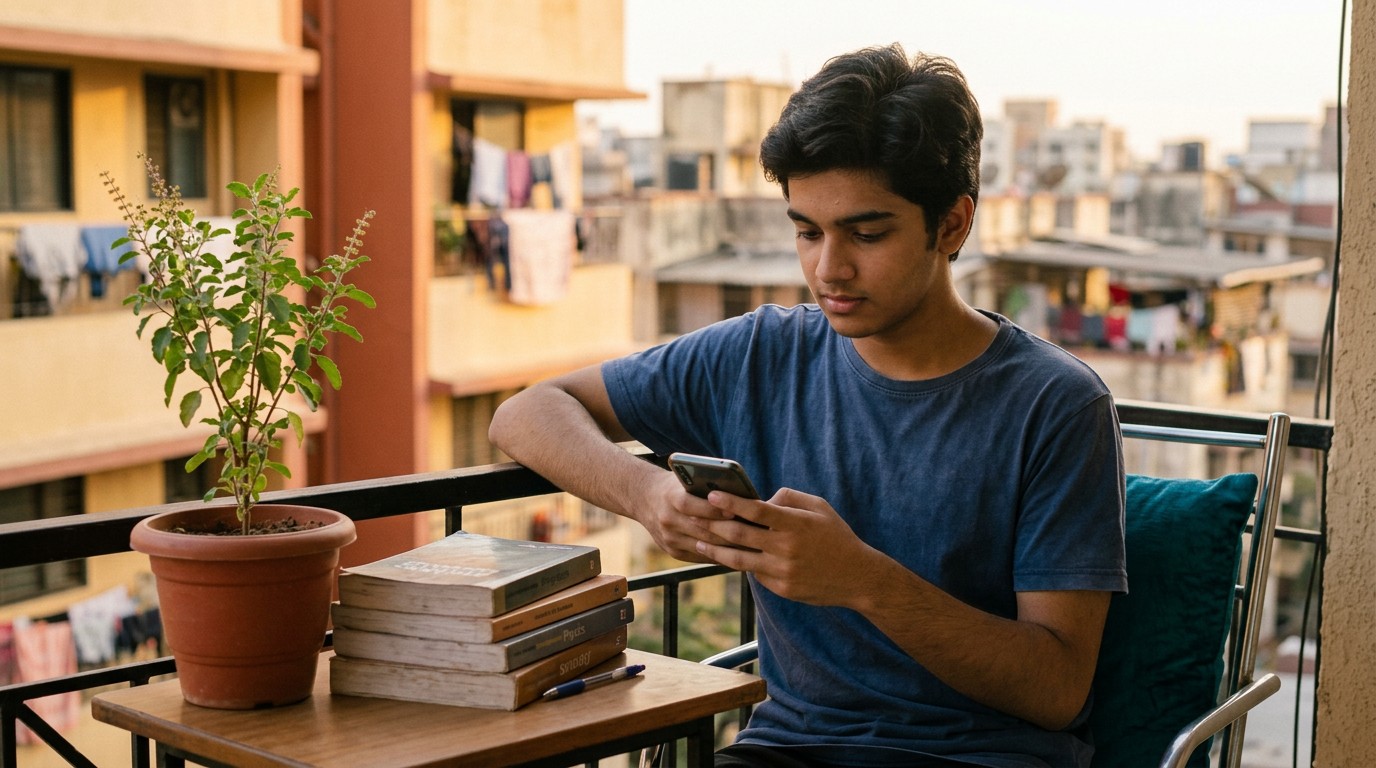
Which platforms take Indian students, and what do they ask for?
We read each platform’s own pages on 15 September 2026 rather than trusting the listicles, which still recommend services that do not accept Indian applicants. Every row links to the page it came from. For the wider list of platforms that accept Indian applicants at all, start with our platform eligibility guide.
| Platform | Minimum age | Education asked for | The India condition | Pay as published | Source, checked 15 Sep 2026 |
|---|---|---|---|---|---|
| Outlier | 18, or the age of majority | FAQ says at least an associate degree; the same FAQ says students of legal working age can work | India is on the list of countries you may work from, policy effective 15 July 2026 | Varies by project; paid weekly via PayPal, Airtm or ACH | Terms, FAQ, location policy |
| TELUS Digital, Quality Assurance Rater (India) | Not stated on the posting | No degree listed; research ability shown by background or track record | Resident in India for the last 5 consecutive years; broadband, smartphone and a computer | 8 USD an hour, paid on completed tasks | Job posting |
| CrowdGen by Appen | 18 | Set per project | Set per project; some project pages ask for US residence | Set per project | Terms of service |
| Clickworker | 18 | None; entry tests on writing and language | You must be allowed to work where you live | Per task | Clickworker crowd page |
Two rows deserve a second look from students specifically. TELUS Digital’s India rater posting wants five consecutive years of residence in India, so anyone who recently came back from studying or living abroad may not qualify yet. It also expects a personal computer and broadband every day, which is a polite way of saying hostel Wi-Fi that gives up during a big match is not a plan. And Handshake AI, the programme most often pitched at students, is not on this list at all: as our comparison of expert tier platforms found, it requires US work authorisation.
What do students who tried AI training work actually report?
We read one July 2026 thread on r/beermoneyindia started by an Indian student, with its replies, and a handful of 2026 reviews from India on Outlier’s Trustpilot page. Read these as testimony, what people say happened to them, not as a measure of what any platform pays. Reddit and Trustpilot accounts cannot be verified by us, and one reply in that thread itself said some of the glowing comments looked fake.
In the Reddit thread, an 18 year old who had finished first year of BTech Computer Science wrote that they had cleared Outlier’s initial assessment and hit the identity step, where the verification partner Persona asked for Aadhaar and PAN. Their worry was not pay. It was handing two identity documents to a website, and whether that could end in someone taking a loan in their name. That is a reasonable worry and the thread did not really answer it.
The replies were about money instead. A second year BTech student reported receiving 75 dollars, about Rs 7,200, in their bank account for work on one project. Another commenter reported a best week of about 170 dollars and called onboarding brutally hard. A third said they earned about 800 dollars before being removed from a project, which is the part of this work nobody puts in a thumbnail: projects end, and removals happen without much explanation.
On Trustpilot, a reviewer from India describing themselves as a student claimed, in August 2026, more than 3,000 dollars in July. Treat that the way you would treat any single extraordinary claim on a review site: possible, unverifiable, and very far from typical. Put it next to TELUS Digital’s published 8 dollars an hour and the gap tells you how wide the range of student experience runs.
Where these accounts agree with the official pages: payment is real, verification is thorough, and the assessment is where most people stop. Where they differ: the FAQ says a degree is required, and students report getting through without one. For why the hours come in bursts rather than a steady weekly stipend, our look at realistic AI training hours has the numbers.
Padhai ke saath kitna time dena padega?
As much or as little as you like, which is both the attraction and the trap. Outlier’s FAQ says there are no minimum hour requirements and payments run weekly. That fits a semester well: heavy in the break, light in exam week. It fits badly if you plan your fees around it, because work arrives when a project needs people, not when your hostel rent is due.
One more practical point. Outlier’s working location policy lists the countries you may work from and bans VPNs used to hide where you are. Going home for the holidays inside India is not what that rule is about, but going abroad on an exchange semester might be, so check before you log in from somewhere new. Ghar jaane se pehle laptop pack karo, VPN nahi.
Can scholarship and research fellowship holders do this work?
This is the question almost no guide asks, and for some students it decides everything. If you hold a research fellowship, the fellowship’s terms may forbid any paid work. The CSIR guidelines for Junior Research Fellowships awarded through CSIR-UGC NET, effective 1 March 2023, say that paid or honorary, part or full time employment, or private practice, is not permissible during the tenure. The same guidelines put the JRF stipend at Rs 37,000 a month for the first two years.
An AI training contract is not a salaried job, but a clause that forbids honorary work as well as paid work is clearly written to leave no gap, and arguing the definition with your funding agency after the fact is not a strong position. Scholarships and other fellowships carry their own terms. Read yours, and if it is unclear, ask the office that administers it in writing before you sign up. This is general information, not legal advice.

Do students pay tax on AI training income?
Student status changes nothing in income tax. Once you are 18, the income is yours, not your parents’, and it is taxed like anyone else’s. For assessment year 2026 to 27, the income tax department’s guidance puts the basic exemption at Rs 4,00,000 under the default new regime and Rs 2,50,000 under the old one, with a rebate of up to Rs 60,000 under section 87A where taxable income does not exceed Rs 12,00,000. Most students earning from these platforms will owe nothing.
Owing nothing is not the same as having nothing to do. Platforms ask for your PAN before paying, foreign payments leave a record with your bank, and a return can still be worth filing. Our guide to tax on online earnings below the exemption limit explains when filing is required even at nil tax, and our note on when a PAN is genuinely needed explains which requests are normal and which are a warning sign. This is general information, not tax advice.
How do you spot a fake AI training job aimed at students?
The fakes copy the brand names and change one thing: they ask you for money. A registration fee, a paid certificate course that guarantees placement on Outlier, a Telegram group that sells assessment answers. Legitimate platforms charge students nothing to join, and none of them recruit through a stranger’s WhatsApp message. If an offer needs your money before your work, close it, and if money has already gone, call 1930 and report it on cybercrime.gov.in the same day.
Frequently asked questions
Can a 17 year old student in India join Outlier or Appen?
No. Outlier’s terms require you to be at least 18 or the age of majority where you live, and CrowdGen by Appen and Clickworker both set 18 as the minimum. Use the time to build a skill you can show when you turn 18.
Kya first year student bina degree ke AI training kar sakta hai?
Kuch students kar rahe hain, lekin guarantee nahi hai. Outlier ki FAQ likhti hai ki associate degree chahiye, aur saath hi students ko welcome bhi karti hai. July 2026 mein ek first year BTech student ne assessment clear karke verification tak pahunchne ki baat likhi thi.
Is it safe to give Aadhaar and PAN for AI training verification?
On a legitimate platform’s own verification flow, reached from its official website, it is standard. Never send the same documents over WhatsApp, email or Telegram to someone who contacted you, and never alongside a payment request.
Can CSIR or UGC fellowship holders do AI training work?
CSIR’s JRF guidelines say paid or honorary, part or full time employment is not permissible during the fellowship. Other scholarships have their own conditions, so read your terms and ask the administering office in writing before signing up anywhere.
Hostel ke Wi-Fi par AI training ho sakti hai?
Kuch tasks ho jaate hain, lekin TELUS Digital jaise platforms daily reliable broadband, smartphone aur personal computer maangte hain. Assessment ke beech connection gaya to attempt bhi ja sakta hai, isliye important kaam stable connection par hi karein.
Will AI training income affect my parents’ taxes?
Once you are 18, the income is yours and is taxed in your own name, not added to your parents’ income. For AY 2026 to 27 the default regime exemption is Rs 4 lakh, so most student earnings attract no tax.
Platform rules and rates change without notice. This page was verified in September 2026 and is rechecked on the Sunday refresh. If you hit something different, tell us in the comments and we will update it.

Leave a Reply